

Free Consultations
847-263-1200
Prosecutor Evidence in Illinois DUI Cases and How To Fight It
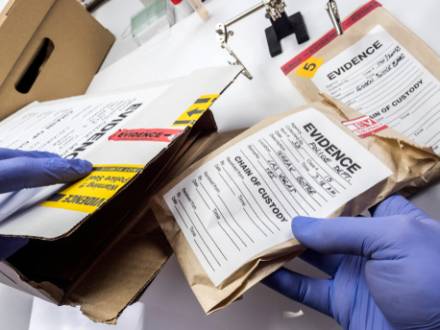 The evidence prosecutors use in Illinois DUI cases is not always as solid as it looks. Breathalyzer results can be challenged. Field sobriety tests can be questioned. Officer testimony can be disputed. If you have been charged with DUI in 2026, a McHenry County, IL DUI defense lawyer can review the evidence in your case to build a defense.
Under 625 ILCS 5/11-501, Illinois law makes it illegal to operate a motor vehicle with a blood alcohol concentration (BAC) of 0.08 percent or higher. It also applies to driving while under the influence of alcohol or drugs to a degree that makes you incapable of driving safely. A first offense is typically a Class A misdemeanor, carrying up to 364 days in jail and fines up to $2,500. Knowing what the prosecution will use against you is the first step toward building a real defense.
What Types of Evidence Do Prosecutors Typically Use To Prove DUI Cases in Illinois?
In most Illinois DUI cases, the prosecution builds its case from several different categories of evidence. These are often layered together, and the strength of the case depends heavily on how each piece was gathered and handled.
Officer Observations
Before any chemical test happens, an officer forms an opinion about whether you appear impaired. They will note things like the smell of alcohol, slurred speech, bloodshot eyes, difficulty following instructions, or how you were driving before the stop. These observations become part of the police report and often form the foundation of the prosecution's narrative.
The important thing to understand is that officer observations are inherently subjective. They reflect one person's interpretation of a situation, and that interpretation can be wrong. Nervousness, a medical condition, fatigue, or even allergies can produce signs that an officer reads as intoxication. When dashcam or body camera footage exists, it can confirm or contradict exactly what the officer says they saw.
Field Sobriety Tests
Field sobriety tests were developed by the National Highway Traffic Safety Administration (NHTSA). Illinois courts have made clear that they are only admissible if the officer was properly trained and administered them strictly according to NHTSA protocols.
Even when done correctly, these tests are not perfectly accurate. NHTSA's own research shows that the full battery of tests is not fully accurate under ideal conditions. That means that even sober people could get results that make it seem as if they are impaired. Uneven road surfaces, poor lighting, wind, rain, medical conditions, injury, nervousness, age, and footwear can all affect performance in ways that have nothing to do with alcohol. If an officer skipped steps, did not give proper instructions, or administered the test on an uneven surface, those are real grounds to challenge the results.
Breathalyzer Results
The portable breath test (PBT) that an officer may use on the roadside is generally not admissible as evidence of your actual BAC. It can be used to support probable cause for an arrest, but it cannot prove impairment at trial. The evidentiary breathalyzer test, typically administered at the police station, is a different matter. That result can be introduced at trial and is often the centerpiece of the prosecution's case.
However, breathalyzer machines are not infallible. They must be regularly inspected, calibrated, and properly maintained. If a machine has not been serviced according to required schedules, its readings may not be reliable.
In addition, factors like acid reflux or GERD, diabetes, a low-carb diet, and even residual mouth alcohol from mouthwash or burping can produce false readings. Operator error is also a real issue. Officers must follow specific procedures, including a required 20-minute observation period before the test, for results to be admissible.
Blood and Urine Test Results
Blood tests are generally considered more accurate than breath tests because they directly measure BAC rather than estimating it. However, accuracy depends entirely on proper procedure. Under 625 ILCS 5/11-501.2, blood and urine samples must be collected and analyzed by certified personnel and must follow strict chain of custody requirements from collection through lab analysis.
If blood was drawn improperly, stored incorrectly, mislabeled, or not refrigerated in a timely way, the sample can be compromised. Additionally, improperly stored blood samples can ferment over time, which artificially raises the BAC reading. Chain-of-custody problems may also provide grounds to challenge the evidence.
Video Evidence
Most patrol cars are equipped with dashcams. Many officers wear body cameras. This footage can work in your favor. If an officer claims you were swerving across lanes but the dashcam shows steady driving, that contradiction matters. If they describe you as unsteady and slurring, but the video shows you walking calmly and speaking clearly, a defense attorney can use that footage to challenge the officer's account directly.
Video evidence cuts both ways, which is why your attorney needs to review it as early as possible before it is lost or overwritten.
How Can Evidence in an Illinois DUI Case Be Challenged?
Common defense strategies in Illinois DUI cases include:
- Challenge the legality of the traffic stop if the officer lacked reasonable suspicion.
- File a motion to suppress breathalyzer results due to improper calibration, maintenance issues, or observation errors.
- Question the accuracy of field sobriety tests and the conditions under which they were given.
- Review the blood test chain of custody for gaps or procedural errors.
- Compare officer testimony with dashcam and body camera footage for inconsistencies.
DUI enforcement in McHenry County is active, particularly during holidays and on well-traveled roads throughout the area. The fact that you were arrested and tested does not mean a conviction is inevitable.
Contact Our Waukegan, IL DUI Defense Lawyer for a Free Consultation
The evidence against you in a DUI case may have real weaknesses that an experienced defense attorney can identify and act on. Attorney Theodore Potkonjak has more than 40 years of legal experience, including over 20 years serving as a judge. You deserve someone in your corner who understands both the law and what is actually at stake for your future. Call Law Office of Theodore S. Potkonjak at 847-263-1200 today to talk to our McHenry County, IL DUI defense attorney.

Arrested? Contact Potkonjak.
Please use this form to contact Attorney Potkonjak and request a free consultation.
Western Lake County Office
345 Park Ave., Suite 7,
Antioch, IL 60002
P 847-263-1200
 Map + Directions


With offices in Gurnee and Antioch, IL, the Law Office of Theodore S. Potkonjak represents people accused of crimes throughout Lake County and McHenry County, including Waukegan, Mundelein, Highland Park, North Chicago, Round Lake, Libertyville, Lake Forest, Vernon Hills, Lake Zurich, Grayslake, Zion, Winthrop Harbor, Fox Lake, Barrington, Deerfield, Lincolnshire, and Buffalo Grove. We extend our reach to many additional neighborhoods and villages across the region, including communities throughout Cook County and DuPage County.
Results listed are not a guarantee or indication of future case results.
501 N. IL-21, Suite 116, Gurnee, IL 60031
847-263-1200

