

Free Consultations
847-263-1200
Can a Juvenile Be Charged as an Adult in Illinois?
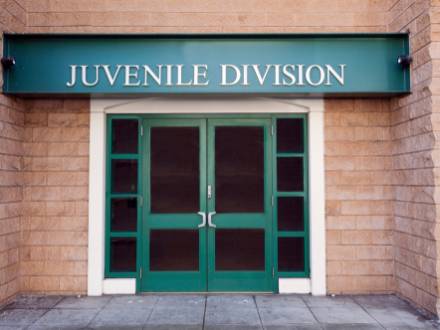 You may be surprised to learn that a juvenile can be charged as an adult in Illinois. Illinois law allows young people under the age of 18 to be prosecuted in adult criminal court under certain circumstances. When that happens, the consequences are drastically different from what a juvenile court would impose. If your child is facing criminal charges in 2026, our Lake County, IL juvenile defense lawyer can help you understand what is happening and fight to keep the case in juvenile court where it belongs.
How Does Illinois Decide Whether To Try a Juvenile as an Adult?
Illinois law sets out specific ways that a juvenile case can move to adult court. There are three main paths, and each one works differently.
Discretionary Transfer
The first is called a discretionary transfer, also known as a juvenile court waiver. Under the Juvenile Court Act of 1987, 705 ILCS 405/5-805, a judge can transfer a case to adult court after a hearing where they consider things like the seriousness of the offense, the juvenile's history, and whether the juvenile is likely to benefit from the programs available in juvenile court.
Mandatory Transfer
For certain serious offenses, Illinois law requires the case to be sent to adult court automatically once the juvenile reaches a certain age. These include first-degree murder, aggravated criminal sexual assault, and certain other violent felonies committed by juveniles who are at least 15 years old.
What Factors Does a Judge Consider in a Transfer Hearing for a Juvenile in Illinois?
When a judge has the option to decide whether a case should move to adult court, they look at a range of factors. These typically include:
- The seriousness of the alleged offense and whether violence was involved
- The juvenile's age and maturity
- The juvenile's prior record, if any
- Whether the juvenile has responded to previous rehabilitation efforts
- The availability of programs in the juvenile system that could address the young person's needs
- The best interests of the juvenile and public safety
This hearing is one of the most important moments in the entire case. What happens here can determine whether a young person faces a few years of juvenile supervision or decades in an adult prison. Having strong legal representation at this stage is critical.
What Are the Differences Between Juvenile Court and Adult Court?
Juvenile court and adult court operate very differently, and the gap between them matters enormously for a young person's future. In juvenile court, the focus is on rehabilitation. Sentences are designed to get the young person back on track, and records may be eligible to be sealed when they turn 17 or 21, depending on the offense. The goal is to give young people a second chance.
Adult court operates on a punitive model. Sentences can include years or decades in prison, and a conviction results in a permanent criminal record that can affect employment, housing, education, and voting rights for the rest of the person's life. Being convicted as an adult also means serving time in an adult facility, not a juvenile detention center.
What Should Parents Do if Their Child Is Facing Adult Charges in Illinois?
Decisions about transfer hearings and reverse transfer motions happen early in the process, and delays in getting legal help can close off options that would otherwise be available. Parents should also avoid having their child speak to law enforcement without an attorney present. Statements made during police questioning can be used against a juvenile in both juvenile and adult court.
Schedule a Free Consultation With Our Waukegan, IL Juvenile Defense Attorney
When a young person's future is on the line, you need someone with the knowledge and experience to fight at every stage of the process. Attorney Theodore Potkonjak brings more than 40 years of legal experience to these cases, including over 20 years as a judge and time spent as both a prosecutor and a public defender. That range of experience means he has seen these cases from every angle and knows exactly what it takes to protect a young person's future.
Call Law Office of Theodore S. Potkonjak at 847-263-1200 to schedule a free consultation with our Lake County, IL juvenile defense lawyer today.

Arrested? Contact Potkonjak.
Please use this form to contact Attorney Potkonjak and request a free consultation.
Western Lake County Office
345 Park Ave., Suite 7,
Antioch, IL 60002
P 847-263-1200
 Map + Directions


With offices in Gurnee and Antioch, IL, the Law Office of Theodore S. Potkonjak represents people accused of crimes throughout Lake County and McHenry County, including Waukegan, Mundelein, Highland Park, North Chicago, Round Lake, Libertyville, Lake Forest, Vernon Hills, Lake Zurich, Grayslake, Zion, Winthrop Harbor, Fox Lake, Barrington, Deerfield, Lincolnshire, and Buffalo Grove. We extend our reach to many additional neighborhoods and villages across the region, including communities throughout Cook County and DuPage County.
Results listed are not a guarantee or indication of future case results.
501 N. IL-21, Suite 116, Gurnee, IL 60031
847-263-1200

