

Free Consultations
847-263-1200
Possible Defenses for a Drug Distribution Charge in Illinois
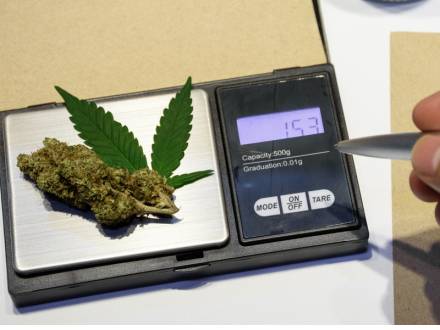
If you face a drug distribution charge in Illinois in 2026, several defenses could help your case. You can challenge how police found the drugs, whether you knowingly possessed them, or whether the evidence shows intent to deliver rather than personal use. These differences can affect your sentence and probation options. A Lake County, IL drug crimes defense lawyer can review the evidence and help you build a strong defense.
What Does Illinois Have to Prove in a Drug Distribution Case?
Illinois charges most drug distribution offenses under 720 ILCS 570/401. This law makes it illegal to knowingly make or deliver a controlled substance, or possess it with plans to make or deliver it.Methamphetamine distribution is covered by a separate law. Illinois drug distribution penalties depend on the type and amount of drugs involved, with more serious charges carrying longer prison sentences.
For possession with intent to deliver, prosecutors must prove that you knowingly possessed the drugs and intended to transfer them to someone else. They can use packaging, cash, and other evidence to argue that you planned to distribute drugs.
If you are charged with actual delivery, prosecutors have to prove that you knowingly transferred or attempted to transfer the drugs. No sale or exchange of money is required.
Can You Challenge the Police Search in an Illinois Drug Distribution Case?
An illegal search can weaken a drug case, especially when the drugs are the main evidence. A motion to suppress asks the judge to exclude evidence obtained unlawfully. When the drugs are excluded, the prosecution may have to dismiss the case if there is not enough other evidence.
Possible grounds for challenging a search include:
-
A traffic stop made without reasonable suspicion
-
A stop extended beyond the time needed for its original purpose
-
A vehicle search that went beyond what the law allowed
-
Consent obtained through threats, coercion, or a false claim of authority
-
A warrant issued without probable cause
-
Officers searching areas or seizing items without legal authority
-
An inventory search that did not follow standard procedures
-
A dog sniff conducted after an unlawfully prolonged detention
Squad and body camera footage can help show whether officers followed the law. The video may reveal details missing from the police report. Your attorney should request this footage early to help preserve it.
How Can You Fight Drug Distribution Charges if the Drugs Were Not Yours?
Since Illinois law requires prosecutors to prove that you knew about the drugs and had control over them. Simply being near drugs is not enough for a conviction. If drugs were found in a shared home or vehicle, prosecutors must show evidence connecting you to them. This could include your belongings, statements, or fingerprints. Being the driver or living in the home does not prove possession. Your attorney can challenge whether you knowingly possessed the drugs, even if they belonged to someone else.
Can You Argue Personal Possession Instead of Drug Distribution in Illinois?
Arguing that drugs were for personal use rather than delivery can reduce the charges and penalties. Prosecutors may point to the amount of drugs, small packages, scales, cash, or multiple phones as signs of distribution. However, these items do not always prove someone intended to deliver drugs. The amount could be for personal use, and cash or scales can have other explanations.
Your attorney can use treatment records or other evidence to support this defense. If the charge is reduced to possession, probation or treatment programs may be available. It depends on the substance, amount, your criminal history, and program eligibility.
Can You Avoid a Conviction for Drug Charges in Illinois?
Some defendants can avoid prison or a felony conviction through special programs. Illinois drug courts provide treatment and supervision. However, completion does not always lead to dismissal. For Class 2 or more serious distribution charges, prosecutors must agree to drug court admission under 730 ILCS 166/20.
Under 720 ILCS 570/410, eligible defendants facing certain possession charges can complete 24 months of probation and receive a dismissal. This does not apply directly to distribution charges. The Illinois Substance Use Disorder Act also allows treatment-based probation in qualifying cases. Eligibility depends on your charges and criminal history.
Schedule a Free Consultation With Our Waukegan, IL Drug Crimes Defense Attorney
Attorney Theodore Potkonjak brings over 40 years of legal experience. He spent more than 22 years serving as a judge. He has also worked as both a prosecutor and a public defender. This experience provides valuable insight into how drug cases are investigated, prosecuted, and decided.
Contact Law Office of Theodore S. Potkonjak at 847-263-1200 to talk to our Lake County, IL drug crimes defense lawyer today.

Arrested? Contact Potkonjak.
Please use this form to contact Attorney Potkonjak and request a free consultation.
Western Lake County Office
345 Park Ave., Suite 7,
Antioch, IL 60002
P 847-263-1200
 Map + Directions


With offices in Gurnee and Antioch, IL, the Law Office of Theodore S. Potkonjak represents people accused of crimes throughout Lake County and McHenry County, including Waukegan, Mundelein, Highland Park, North Chicago, Round Lake, Libertyville, Lake Forest, Vernon Hills, Lake Zurich, Grayslake, Zion, Winthrop Harbor, Fox Lake, Barrington, Deerfield, Lincolnshire, and Buffalo Grove. We extend our reach to many additional neighborhoods and villages across the region, including communities throughout Cook County and DuPage County.
Results listed are not a guarantee or indication of future case results.
501 N. IL-21, Suite 116, Gurnee, IL 60031
847-263-1200

